

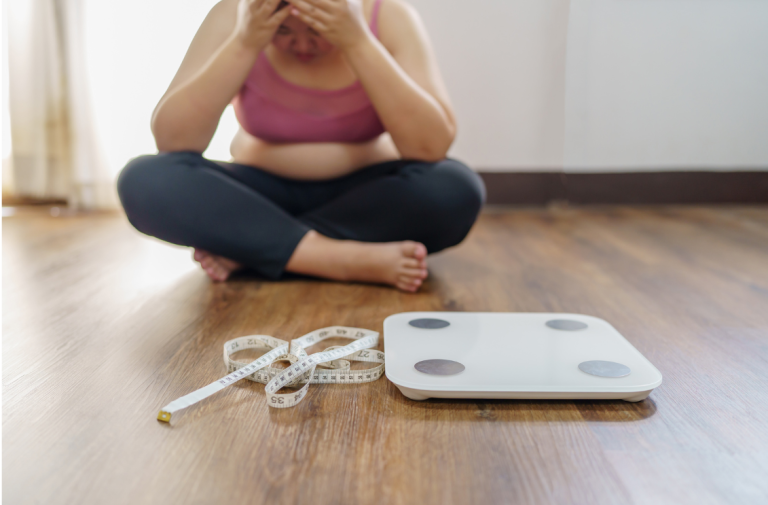
Why simply cutting calories is never the answer
On top of all the other symptoms that some women may experience around menopause, weight gain can seem like a particularly cruel hand for mother nature to deal. Particularly weight gain around the waist. It can also correlate with increased risk of heart disease, insulin resistance and high blood pressure so is something to be aware of as your body changes. This is partly to do with the decrease in oestrogen, seeing a more male-type laydown of fat. However oestrogen can’t be blamed for everything, increased Follicle Stimulating Hormone (FSH) is also thought to contribute[1].
Body Composition
We have been conditioned for most of our lives to think of losing weight as a goal for happiness and health. No one ever spoke to us about maintaining muscle mass versus specifically losing fat. This is where our focus needs to change. I know this is a huge ask. As opposed to purely focusing on the figures on the scales try a more in-depth measurement of body fat percentage or waist to hip ratio. From this info you can really focus on your overall body composition, increasing and maintaining muscle mass whilst managing body fat. It is muscle that is going to keep you active, able to move, reduce injury rate and keep your metabolism nice and high.
Why cutting calories won’t work
Despite reading this, you might still be tempted to try drastically cutting calories in an attempt to shift the weight. Here is why it is unlikely to work…because it wasn’t eating more calories that caused you to gain this weight in the first place, it’s your hormones. What I guarantee calorie restriction will do is make you feel miserable, worsen already broken sleep and grind your metabolism to a halt.
What can I do?
First thing – Reframe
Some weight gain is natural at menopause. I know this might not be what you want to hear. Instead of focusing on your weight can you reframe and work instead on improving your body composition? This is the ratio of body fat to lean muscle mass. Focus on keeping and building muscle which will help to keep your metabolism high and importantly help you to keep moving your body effectively and with reduced injury risk. Resistance training is key here. Any activity where your muscles have to resist weight or gravity is really important, it doesn’t have to be lifting weights or nothing. Yoga and body weight exercises count too.

You can’t out-diet stress
Some refer to this as ‘stress belly’. This is our increased predisposition to store weight around our waist when we are anxious and stressed. Your feelings of stress are also likely to increase around menopause so this might take some real work to get on top of. Alternate nostril breathing, 4-7-8 breathing are all quick breathing techniques to kick in your body’s ‘rest and repair’ mode as opposed to ‘fight or flight’. Talking to a loved one about how you are feeling and looking at how they could help support you might help reduce the very common feeling that everything is on you.
Balance the blood sugar
This will help with caffeine and sweet cravings, reduce fat storage mode and reduce stress hormones being released when your blood sugar drops. Key culprits for the blood sugar rollercoaster are alcohol, refined carbohydrates, fruit juices, no breakfast, caffeine. Protein and fibre both keep you feeling fuller for longer, as well as helping with levelling out blood sugar. Think about having protein and fibre at every meal.
Our insulin sensitivity drops when our oestrogen levels fall in menopause. This really plays havoc with our blood sugar and weight, as the cells won’t take in the glucose in our blood, our liver has to help out and store the glucose as fat. This means we need to take even more care around eating refined carbohydrates. Try to swap refined carbs for more complex/wholegrain options and reduce portion sizes, with protein taking up the slack on the plate.
Phytoestrogens
Soy has had a bad rep over the last few years but newer research now suggests a promising effect of this phytoestrogen to mimic oestrogen in the body. The mild estrogenic effect of phytoestrogens such as red clover (supplement) tofu, tempeh, linseed, sesame, oats and lentils has been shown to reduce body fat.
What’s your thyroid up to?
The thyroid controls our metabolism. This butterfly-like gland in our neck can sometimes stop working effectively. It is thought that up to 20% of women over 60 might have an under active thyroid where the thyroid doesn’t produce enough thyroid hormone. Symptoms of hypothyroidism are fatigue, weight gain, hair loss, depression or low mood, constipation and sensitivity to cold. If you are concerned you can ask for your thyroid stimulating Hormone to be tested (TSH) on your next blood test.
Still worried?
This article does not provide medical advice. Bloating, loss of appetite, abdominal discomfort or changes in toilet habits can be signs of something more serious. As with any sudden onset of new, frequent or persistent symptoms it is really important to get checked over by your GP.
Above all, long term, small, sustainable tweaks to your nutrition and your lifestyle will ultimately prove much more effective than drastic, sudden calorie cutting. Results might not be overnight but they will be longer lasting and you will likely feel the benefit in more places than just your waistline.
Want to take action now?
Why not check out my Menopause Programme designed specifically for women just like you. Book a free discovery call and we can start to improve your health.

The British Thyroid Foundation (2023)Thyroid and Menopause. Available at: https://www.btf-thyroid.org/thyroid-and-menopause-article
Desmawati, D., & Sulastri, D. (2019). Phytoestrogens and Their Health Effect. Open access Macedonian journal of medical sciences, 7(3), 495–499. https://doi.org/10.3889/oamjms.2019.044
[1]Fenton A. (2021). Weight, Shape, and Body Composition Changes at Menopause. Journal of mid-life health, 12(3), 187–192. https://doi.org/10.4103/jmh.jmh_123_21


